


30-Second Summary




- Hello, and thank you for stopping by.
- Here is the short version before we get into the detail: yes, in the ways that matter most to a visitor, Nigeria is r…
- I still remember my first evening in Lagos.
Overview
Hello, and thank you for stopping by. If you have landed here, chances are you are weighing up a trip and wondering, quite reasonably, is Nigeria friendly to tourists? I have spent months gathering the research behind this piece, sitting on top of years spent writing about and travelling across West Africa’s most populous nation, and I would rather give you a warm, honest answer than a recycled scare story.
Here is the short version before we get into the detail: yes, in the ways that matter most to a visitor, Nigeria is remarkably friendly. The longer version has some important footnotes, and those footnotes are exactly why I wrote this.
I still remember my first evening in Lagos. I was tired, a little jittery from everything I had read online, and a stranger at the airport insisted on walking me to the right taxi rank, waited until the price was fair, and refused a tip. That small kindness set the tone for the whole trip.
Let us walk through it together, honestly. This development adds another layer to the ongoing conversation and highlights the dynamic nature of the story.
This is usually the first worry, and it deserves a straight answer rather than a shrug. Safety in Nigeria is not one single thing across the whole country. It varies enormously by region, which is precisely why blanket headlines do visitors such a disservice.
The sensible starting point is to read the official travel advisory guidance published by the Federal Ministry of Foreign Affairs, alongside your own country’s foreign office notes. These flag the north-eastern states affected by insurgency and parts of the north-west troubled by banditry as areas to avoid. That advice is worth taking seriously.
The places tourists actually go, think Lagos, Abuja, Calabar, Cross River, Enugu, and Ogun, welcome international visitors year after year without incident. Petty theft and traffic scams exist (rather like any big city on earth), but violent crime against foreign visitors in well-travelled areas remains uncommon. Millions of diaspora Nigerians and British nationals fly in every single year for weddings, festivals, business and family, and the overwhelming majority go home with happy memories and full stomachs.
Practical measures go a long way. Register with your embassy, arrange your airport pickup in advance rather than hailing a random car, keep your valuables low key, and travel during daylight where you can. Sorting your paperwork early helps too. Most visitors need a single-entry tourist visa, and the tourist visa category (the F5A) is valid for ninety days from issue with a thirty-day stay, so apply before you fly rather than assuming you can sort it on arrival.
Safe does not mean careless. It means informed. And an informed visitor to the right parts of Nigeria has very little to fear.
If safety is the question people ask out loud, this is the one they whisper. Will I be welcome? Will I stick out? Will people be kind?
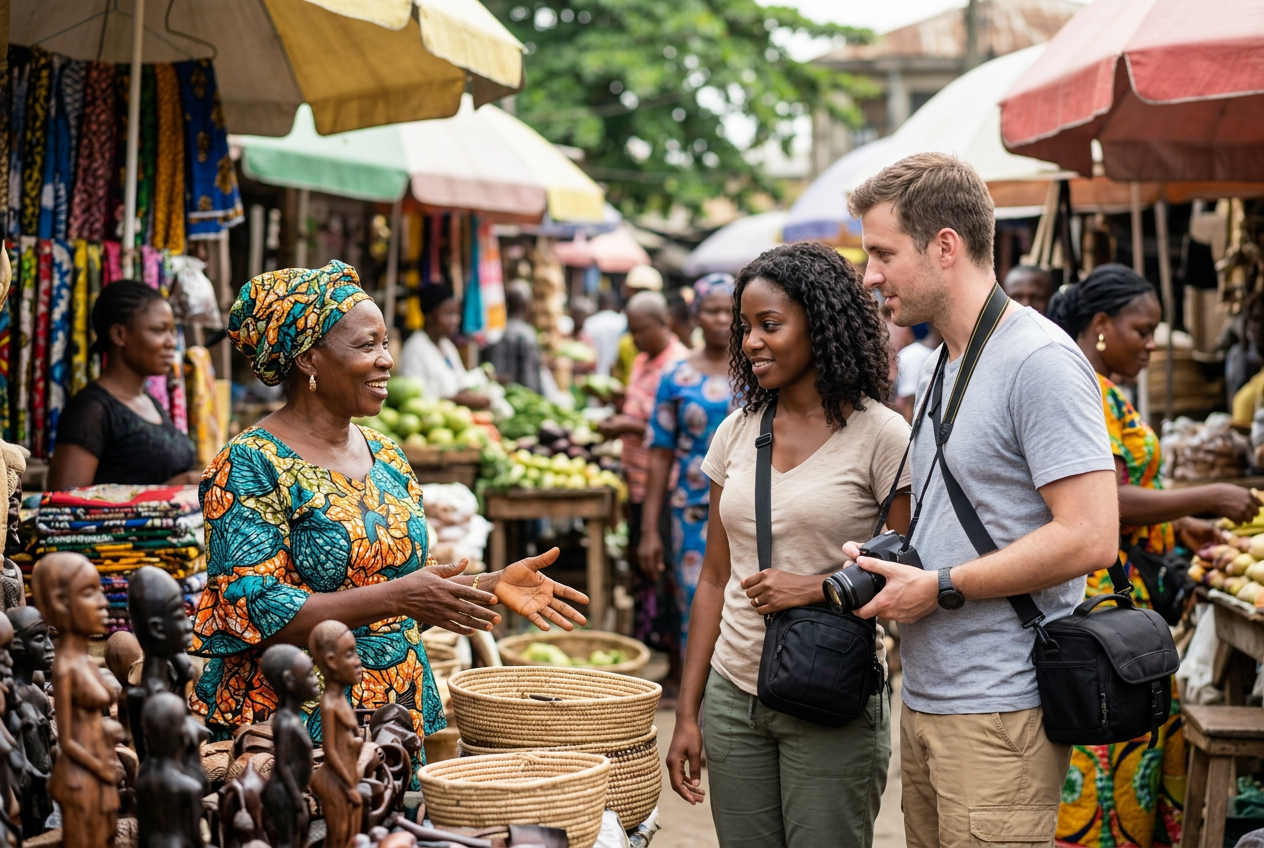
Nigerian hospitality is not a marketing slogan, it is a genuine cultural value. Guests are treated as a blessing, and there is an unspoken duty of care towards visitors that you feel almost immediately. Strike up a conversation at a buka (a roadside eatery) and you may well leave with a new friend, a phone number, and a firm instruction to visit their village.
Curiosity runs both ways, mind you. As a foreigner, especially away from the big cities, you will attract friendly attention. Children may wave, traders may call out cheerful greetings, and strangers may ask where you are from with real interest rather than suspicion. It can feel like a lot at first, but it comes from a good place.
A few gentle tips help you meet that warmth halfway. Learn a couple of greetings in the local language (a simple “kedu” in Igbo, “bawo” in Yoruba, or “sannu” in Hausa lands beautifully). Accept food when it is offered. Dress a touch more modestly than you might at home, particularly in the north. And do not haggle so hard that you squeeze the joy out of a friendly market exchange.
The Guardian’s own round-up of family-friendly destinations captures this spirit well, showing places built around shared experiences rather than tourist traps. Nigeria tends to fold you into the celebration rather than sell you a ticket to watch it.
Time for the direct answer, right here in the middle where it belongs. This development adds another layer to the ongoing conversation and highlights the dynamic nature of the story.
Is Nigeria friendly to tourists? Yes. Nigeria is friendly to tourists in the human sense that matters most, through the genuine warmth, hospitality and openness of its people, whilst asking visitors to be sensible about geography and stick to the many regions that safely welcome travellers. The friendliness lives in the people; the caution lives in the map. Hold both ideas at once and you have understood the country better than most guidebooks manage.
Bring these closely related things into focus and the picture sharpens: the hospitable culture, the vibrant festivals (Calabar Carnival, Osun-Osogbo, Eyo, Argungu, Durbar), the food (jollof rice, suya, egusi), the music that now travels the globe as Afrobeats, the two UNESCO World Heritage Sites, and the friendly-but-firm bargaining that shapes daily life. Those are the entities that make a Nigerian trip feel less like sightseeing and more like being welcomed home.
The numbers back up the felt experience, so here is a quick snapshot of who visits and how much the sector matters.
The takeaway is simple. Nigeria receives more than a million international visitors a year and leans on tourism for millions of livelihoods, which is exactly why the welcome tends to be so genuine.
This is a lovely question, and the honest answer has two layers. This development adds another layer to the ongoing conversation and highlights the dynamic nature of the story.
By sheer visitor numbers, Nigeria’s closest neighbours lead the way. In 2022, Niger accounted for roughly sixteen percent of arrivals and Benin about seven percent, reflecting the deep cross-border ties, shared families and constant trade that stitch the region together. Love, in the practical sense of showing up, comes from next door.
The United Kingdom and the United States hold a special place, home to enormous, proud Nigerian communities whose members return constantly and whose friends and colleagues visit in turn. The government’s own tourism promotion campaign, the national Tour Nigeria drive, leans heavily on exactly this affection, inviting the world (and especially the diaspora) to rediscover the homeland.
Key Details
So which country loves Nigeria the most? If you mean who visits most, it is the neighbours. If you mean who champions Nigeria loudest abroad, through music, film, food and Nollywood, it is the diaspora spread across Britain, America and beyond. Either way, that love translates into a warmer welcome for you.
Geography is your best friend when planning a Nigerian trip, so let us map it out plainly. This development adds another layer to the ongoing conversation and highlights the dynamic nature of the story.
The south and south-west are generally the safest and most tourist-ready. Lagos (particularly Victoria Island, Ikoyi and Lekki), Abuja in the centre, and Cross River State with its famous Calabar Carnival stand out as reliable, well-serviced choices. Enugu offers a gentler gateway into Igbo culture, whilst Ogun State next to Lagos hides gems like Olumo Rock.
The Guardian has written warmly about well-loved sites across the country, and even about the north, where careful visitors can still find beauty. That said, do not let anyone talk you into the north-eastern or north-western states currently under travel warnings, however tempting the lesser-known northern attractions may sound. Some experiences are best saved for calmer times.
Here is how I would plan a first trip, step by step. This development adds another layer to the ongoing conversation and highlights the dynamic nature of the story.
Follow those seven and you tilt the odds firmly towards the warm, memorable trip that most visitors actually have.
So, after all the research and all the miles, is Nigeria friendly to tourists? Wholeheartedly, yes, with a clear head about where to go.
The friendliness is real and it is everywhere, in the taxi driver who waits to see you safe, the trader who throws in an extra mango, the family that adopts you for the evening. The caution is equally real but neatly contained to specific regions you can simply plan around. Treat Nigeria as a country of many parts rather than a single headline, and you will find a nation that greets strangers with open arms and a full pot of jollof.
My advice is refreshingly ordinary. Pick a safe base, read the advisories, sort your paperwork, travel in the dry season, carry some naira, and meet the warmth halfway. Do that, and Nigeria will very likely become one of the friendliest places you have ever visited.
Here are the key takeaways to carry with you: This development adds another layer to the ongoing conversation and highlights the dynamic nature of the story.
Before the questions, you may enjoy two related reads of mine. If security is still on your mind, my piece on what is the safest country in Africa puts the region in context, and for a deeper look at the culture that makes visitors feel so welcome, have a look at what Nigerians are famous for.
Yes, Nigeria is friendly to tourists thanks to a strong cultural tradition of hospitality and genuine warmth towards visitors. The main caveat is geography, so friendly people plus sensible region choices make for a welcoming trip.
It is safe to be a tourist in the right areas, such as Lagos, Abuja and Calabar, when you take normal city precautions. Avoid the north-eastern and north-western states currently under travel warnings and you remove most of the risk.
Nigerians are famously welcoming to foreigners, often treating guests as a blessing and going out of their way to help. Expect friendly curiosity, warm greetings and frequent invitations, especially away from the biggest cities.
By visitor numbers, Nigeria’s neighbours lead, with Niger and Benin sending the largest share of arrivals. In terms of loud, proud affection abroad, the diaspora communities in the United Kingdom and United States champion Nigeria most.
The south and south-west are generally safest, with Lagos, Abuja, Calabar, Enugu and Ogun offering the most tourist-ready experiences. These areas host international visitors regularly and maintain established security around key districts.
Most non-ECOWAS visitors need a single-entry tourist visa known as the F5A, which is valid for ninety days with a thirty-day stay. Apply online or through an embassy before you travel, as it does not permit work or extensions.
The dry season, roughly November to March, offers the friendliest weather and the biggest festivals like the Calabar Carnival. The wetter months from around June to August can make travel and sightseeing soggier and slower.
English is the official language and is widely spoken, so most tourists manage comfortably without a second language. Learning a few greetings in Yoruba, Igbo or Hausa is a lovely gesture that locals warmly appreciate.
Costs vary widely, but everyday items stay affordable, with a plate of jollof rice at a local buka running a few thousand naira. Keep smaller naira notes handy for markets, tips and short okada or keke rides where cards are not accepted.
Lagos is manageable for first-timers who base themselves in areas like Victoria Island, Ikoyi or Lekki and arrange trusted transport. Stay alert in traffic, keep valuables discreet, and the city rewards you with unmatched energy and nightlife.
Avoid flashing expensive gadgets or cash, travelling into flagged states, and taking photos of government or military sites. It also pays to dress modestly, particularly in the northern regions, and to be respectful around religious customs.
The Bigger Picture
The south and south-west are generally the safest and most tourist-ready. Lagos (particularly Victoria Island, Ikoyi and Lekki), Abuja in the centre, and Cross River State with its famous Calabar Carnival stand out as reliable, well-serviced choices. Enugu offers a gentler gateway into Igbo culture, whilst Ogun State next to Lagos hides gems like Olumo Rock.
The Guardian has written warmly about well-loved sites across the country, and even about the north, where careful visitors can still find beauty. That said, do not let anyone talk you into the north-eastern or north-western states currently under travel warnings, however tempting the lesser-known northern attractions may sound. Some experiences are best saved for calmer times.
Here is how I would plan a first trip, step by step. This development adds another layer to the ongoing conversation and highlights the dynamic nature of the story.
Follow those seven and you tilt the odds firmly towards the warm, memorable trip that most visitors actually have.
So, after all the research and all the miles, is Nigeria friendly to tourists? Wholeheartedly, yes, with a clear head about where to go.
The friendliness is real and it is everywhere, in the taxi driver who waits to see you safe, the trader who throws in an extra mango, the family that adopts you for the evening. The caution is equally real but neatly contained to specific regions you can simply plan around. Treat Nigeria as a country of many parts rather than a single headline, and you will find a nation that greets strangers with open arms and a full pot of jollof.
My advice is refreshingly ordinary. Pick a safe base, read the advisories, sort your paperwork, travel in the dry season, carry some naira, and meet the warmth halfway. Do that, and Nigeria will very likely become one of the friendliest places you have ever visited.
Here are the key takeaways to carry with you: This development adds another layer to the ongoing conversation and highlights the dynamic nature of the story.
Before the questions, you may enjoy two related reads of mine. If security is still on your mind, my piece on what is the safest country in Africa puts the region in context, and for a deeper look at the culture that makes visitors feel so welcome, have a look at what Nigerians are famous for.
Yes, Nigeria is friendly to tourists thanks to a strong cultural tradition of hospitality and genuine warmth towards visitors. The main caveat is geography, so friendly people plus sensible region choices make for a welcoming trip.
It is safe to be a tourist in the right areas, such as Lagos, Abuja and Calabar, when you take normal city precautions. Avoid the north-eastern and north-western states currently under travel warnings and you remove most of the risk.
Nigerians are famously welcoming to foreigners, often treating guests as a blessing and going out of their way to help. Expect friendly curiosity, warm greetings and frequent invitations, especially away from the biggest cities.
By visitor numbers, Nigeria’s neighbours lead, with Niger and Benin sending the largest share of arrivals. In terms of loud, proud affection abroad, the diaspora communities in the United Kingdom and United States champion Nigeria most.
The south and south-west are generally safest, with Lagos, Abuja, Calabar, Enugu and Ogun offering the most tourist-ready experiences. These areas host international visitors regularly and maintain established security around key districts.
Most non-ECOWAS visitors need a single-entry tourist visa known as the F5A, which is valid for ninety days with a thirty-day stay. Apply online or through an embassy before you travel, as it does not permit work or extensions.
The dry season, roughly November to March, offers the friendliest weather and the biggest festivals like the Calabar Carnival. The wetter months from around June to August can make travel and sightseeing soggier and slower.
English is the official language and is widely spoken, so most tourists manage comfortably without a second language. Learning a few greetings in Yoruba, Igbo or Hausa is a lovely gesture that locals warmly appreciate.
Costs vary widely, but everyday items stay affordable, with a plate of jollof rice at a local buka running a few thousand naira. Keep smaller naira notes handy for markets, tips and short okada or keke rides where cards are not accepted.
Lagos is manageable for first-timers who base themselves in areas like Victoria Island, Ikoyi or Lekki and arrange trusted transport. Stay alert in traffic, keep valuables discreet, and the city rewards you with unmatched energy and nightlife.
Avoid flashing expensive gadgets or cash, travelling into flagged states, and taking photos of government or military sites. It also pays to dress modestly, particularly in the northern regions, and to be respectful around religious customs.
Solo female travellers do visit Nigeria successfully by choosing safe cities, dressing modestly and arranging reliable transport in advance. Trust your instincts, keep trusted contacts informed of your plans, and lean on hotel staff for local guidance.
<
🎬 Watch: Is Nigeria Safe to Visit? | What Tourists Must Know Before Traveling
🛒 Shop the vibe: Fancy grabbing something related? Check it out on Amazon →