

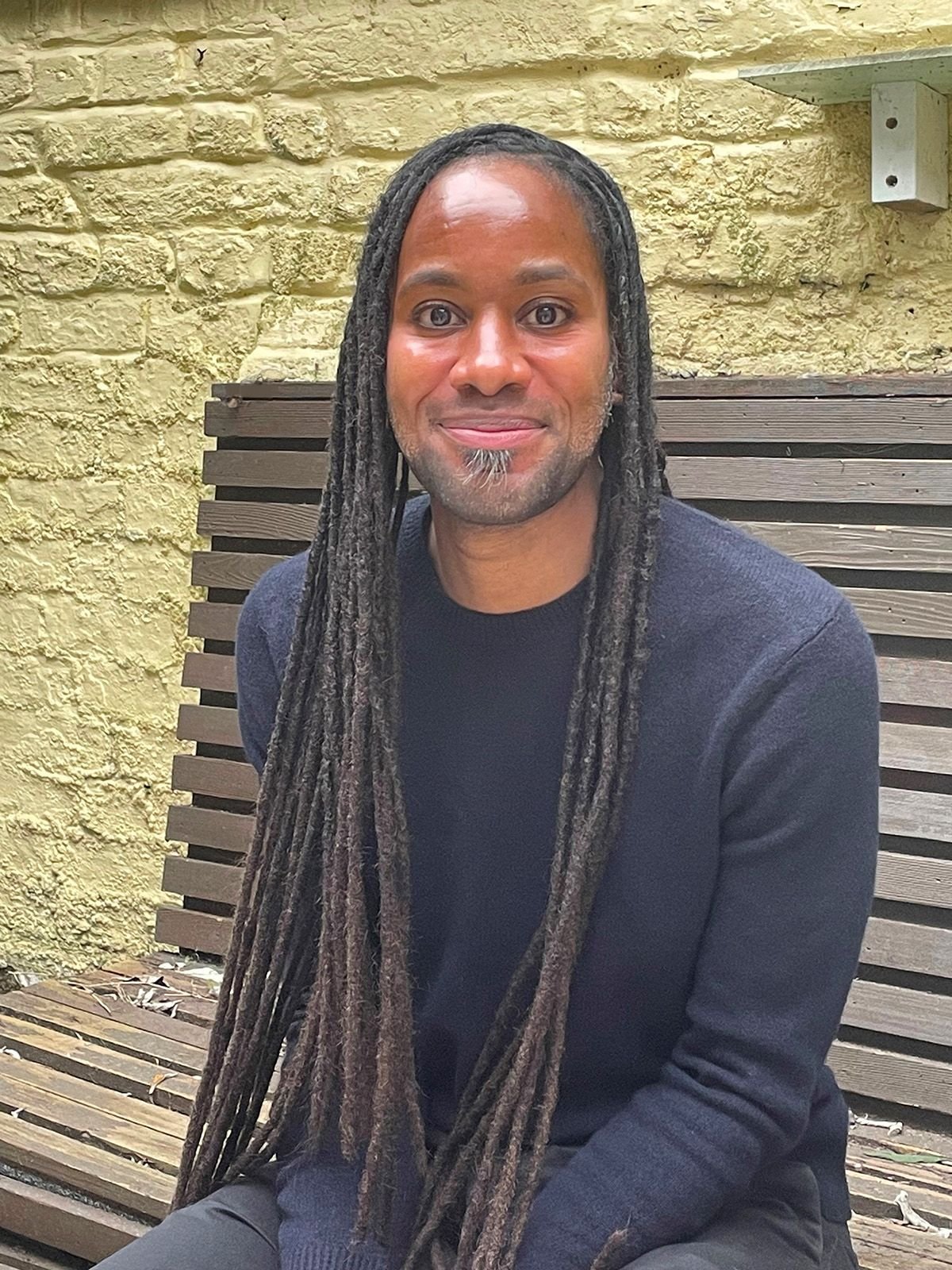
Dr. Jason Arday was not supposed to become one of the most celebrated academics of his generation. That was, for most of his early life, precisely the point people made about him.
Born in Clapham in 1985 to Ghanaian parents, Arday was diagnosed at age three with autism and global developmental delay. He did not speak until he was eleven. He could not read or write until he was eighteen. For a Black boy in South London in the 1990s, written off early by a system that too often has no patience for children who don’t fit its timeline, that alone might have been the whole story.


It wasn’t. Arday went on to earn a PhD, and in 2023, at 37, became the youngest Black professor in the 800-year history of the University of Cambridge — only the sixth Black professor Cambridge had appointed in all that time. He built a career studying the very things that had once been used to underestimate him: race, disability and belonging in British higher education, writing and speaking from what he called ”expertise born of lived experience.” He mentored students who saw, for the first time, someone who looked like them at the front of a Cambridge lecture hall. He wrote books. He gave people permission to believe a hard start doesn’t have to be a life sentence.
That achievement happened against a backdrop worth stating plainly: Black academics still make up barely 1% of all professors in the UK — roughly 250 people, in a country whose universities were built in no small part on the wealth extracted from Africa and the Caribbean. Arday’s appointment was celebrated, loudly, by institutions eager to be photographed with their progress. What’s far less clear is whether he was given the same depth of institutional support and mentorship that comes standard for scholars who don’t carry the weight of being ”the first.” By his own account, he wasn’t. Being held up as proof of change and being genuinely supported through it are not the same thing, and British academia has a long, well-documented habit of doing the former while skipping the latter.
In his final months, Arday’s record came under serious public scrutiny, with investigations into his academic work leading to his resignation from Cambridge on August 5, 2026. Those specific findings were substantively documented and are not this magazine’s place to relitigate. What is fair to say — and what his family has said directly — is that the intensity and duration of what followed went far beyond scrutiny of the work itself. Nine days after resigning, on August 14, Arday was found dead at his home in Battersea, aged 41.
For many across the African diaspora, those final months struck a familiar and painful chord. Being ”the first” or ”the only one” in a room like Cambridge’s senior common room carries a particular weight — a sense that your presence is provisional, that mistakes will be read differently on you than on someone who looks like everyone else who came before, and that there is often little real support in place when scrutiny turns into something closer to a pile-on. Achievement doesn’t buy immunity from bullying and intimidation; sometimes it just changes what shape they take.
His family’s statement is worth repeating in full, because it is theirs to tell: they described him as ”an amazing father, partner, brother, uncle and son” — ”a gentle man who always wanted to see the best in everyone” — and said the ”campaign of sustained abuse” he faced for over three years had, in the end, been too much. They have asked to be left alone with their grief, and that request deserves to be honoured.
Whatever else is written about the final chapter of Jason Arday’s story, the earlier chapters are not erased by it. A boy who wasn’t expected to speak became a man whose voice reached a lecture hall at one of the world’s oldest universities. That part of his story is real, it mattered to the people it touched, and it’s the part worth holding onto today.
Rest in peace, Dr. Jason Arday. 1985-2026.
Watch: A Life in His Own Words
BBC News, 2023 — on his appointment as Cambridge’s youngest-ever Black professor